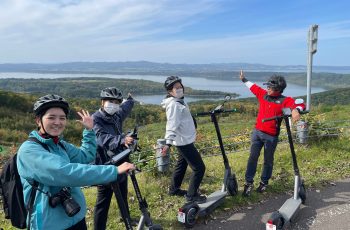
Join a guided electric kick scooter tour! Starting from the Michi-no-Eki in Abashiri, pedal towards the Ryuhyo Glass Museum, and head to Abashiri Port! Visit the Popo 260 breakwater where you can overlook the Clione Lighthouse and Abashiri Port! From there, you can ride around while looking at the port compliant with European HACCP standards, observe fishermen unloading salmon and scallops, and see the columnar joints of Ponmoi! Take a commemorative photo at the landing site of the Tondenhei in Abashiri. This is a convenient course that takes you around the port town.
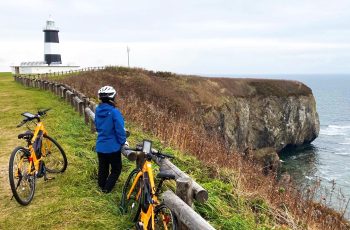
Starting from the experiential interaction facility Connectrip, located on the shores of Lake Abashiri in Abashiri Quasi-National Park, head to Oshoku Lakeside Park to enjoy the full bloom of sunflowers and cosmos. Then, pedal through the forest on a cycling road, a former railroad track repurposed for bicycles. Along the way, take a right turn to enjoy the grand rural landscape towards Notoro Cape Lighthouse. At the free Abashiri City Fisheries Center, you can observe creatures from the Okhotsk Sea such as salmon and crabs. Enjoy the breathtaking view as you cycle to Notoro Cape! You might even encounter some wildlife! On your way back, enjoy Abashiri’s famous fried tempura, visit the correctional exhibition at Abashiri Prison, and return to Connectrip on this 40 km cycling course. With a guide and electric assistance, even beginners can feel at ease!
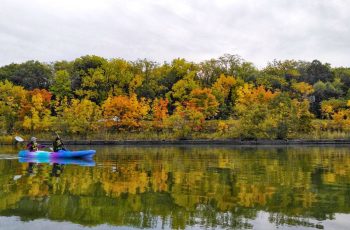
Enjoy a leisurely kayak tour on Lake Abashiri in Abashiri Quasi-National Park. You can observe birds by the water, and if you’re lucky, you might spot White-tailed Eagles or Kingfishers. Additionally, you can land on the Yobito Peninsula, enjoy a drink, and take a walk on the promenade. This tour allows you to fully enjoy Lake Abashiri. A special feature in September is the chance to see many salmon that have swum upstream in the Abashiri River! A dedicated guide will provide information about the local industries and the nature of the national park.
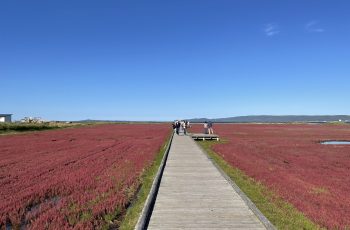
Starting with the skunk cabbage colony by Lake Abashiri from the end of April to May, the Shibazakura Park in Higashi Mokoto blooms from May to June. The sunflower and cosmos fields by Oshoku Lakeside Park are at their best from August to September. In addition, you can enjoy flowers of all seasons at places like the Hana-Tento on Mt. Tento, the Phlox Park, and the Koshimizu Wild Flower Park! The hidden gem, the coral grass colony in Ubaranai, turns completely red at the end of September!
Located within Abashiri Quasi-National Park, Notoro Cape offers stunning views with its cliffs jutting out into the Okhotsk Sea and a picturesque lighthouse. This scenic spot has been featured in many commercials. From here, you can see the wind turbines in the Tokoro area and fishing boats in the Okhotsk Sea! At night, with only the lighthouse’s light, it’s known as a viewing spot where you can enjoy a sky full of stars, including the Milky Way. Many wild animals, such as White-tailed Eagles, Yezo deer, and Red foxes, inhabit the area.
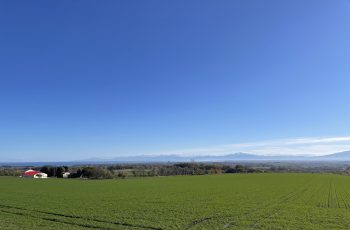
Abashiri Quasi-National Park, adjacent to the World Heritage site of Shiretoko and Akan-Mashu National Park, is a unique area in Hokkaido where nature and living zones coexist. It encompasses five brackish lakes of various sizes, including Lake Abashiri, a bird sanctuary home to species like the White-tailed Eagle and Steller’s Sea Eagle, and Lake Tofutsu, a registered Ramsar site. The beauty of the pastoral landscapes in spring and summer, coupled with the autumn foliage and winter drift ice, make this a truly remarkable area in Hokkaido. The route offering panoramic views of the vast pastoral landscape of Abashiri and the Okhotsk Sea, with the Shiretoko Range in the distance, is known as the “Kando-no-Michi” and there are parking areas at the viewpoints.
Abashiri is one of the leading wheat-growing areas in Hokkaido! The popular stone oven pizza baking experience using locally grown wheat is highly recommended. After rolling out the dough made from locally grown wheat, try baking a pizza in a stone oven with as many local ingredients as you like as toppings! You can also enjoy other Japanese food experiences such as cooking local salmon dishes, making rice cakes and tofu at Connectrip. The experience menu must be booked in advance.
Check out this local favorite, a down-to-earth Izakaya (Japanese pub). Their sashimi is particularly exceptional! You can also enjoy seasonal flavors such as Tokubire(sailfin poacher fish)and oysters. Don’t miss out on the soul food items like bone-in Zangi (fried chicken) & potato salad, and Satsuma-Age(Deep-fried fish paste) using minced cod from Sukesou. The Showa-era retro ambiance of the interior is charming, and we recommend the counter where you can chat with the master. As this is a popular spot, reservations are a must.
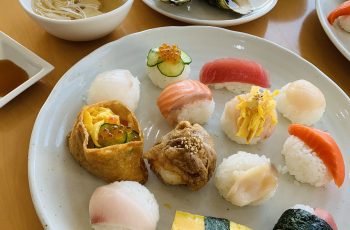
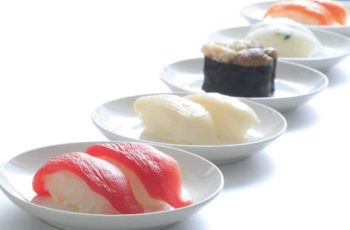
Experience the bounty of the Okhotsk Sea! If you want to enjoy seafood such as salmon, scallops, crabs, and oysters, sushi is highly recommended! Both local sushi restaurants and conveyor belt sushi places are great options to try!